
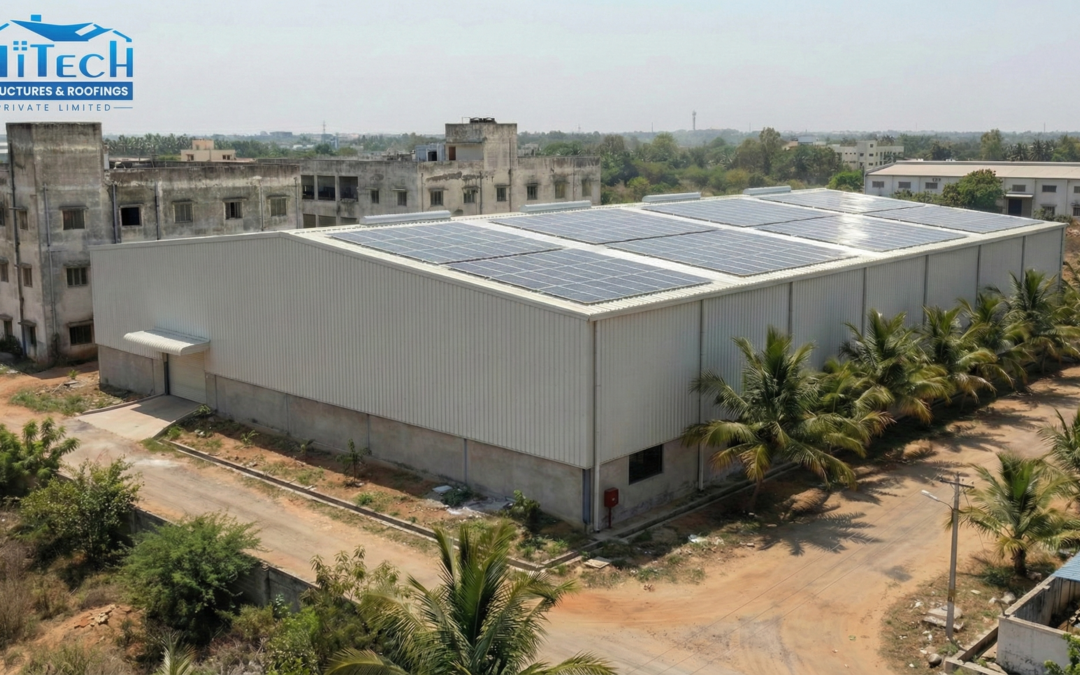
Every January, we hear the same line from factory owners and commercial builders. “Summer varumbodhu paapom… ippo budget-la fit aagattum.” Thats where energy-efficient roofing in Chennai comes in…
By April, the call changes.
“Building full-aa heat… current bill romba jasthi… roof-la enna pannalaam?”
If you’ve worked on industrial or commercial projects in Chennai or anywhere across Tamil Nadu, you know this cycle well. Heat isn’t a surprise here. It’s predictable. And yet, roofing decisions are still often made as if temperature control is optional.
Going into 2026, that mindset is quietly changing. Not because of trends or buzzwords — but because energy costs are no longer forgiving mistakes.
This guide is for people who want to get it right the first time.
Why Energy-Efficient Roofing Is No Longer “Optional”
Let’s be honest. Ten years ago, energy-efficient roofing sounded like a premium idea. Something you’d consider only if the budget allowed.
Today, it’s closer to basic planning.
Electricity tariffs keep climbing. Industrial cooling systems work harder every year. Workers feel the heat faster, machines run warmer, and maintenance cycles shorten. When a roof absorbs and transfers heat all day, the building pays for it every hour.
This is why searches for energy-efficient roofing in Chennai have steadily increased. People aren’t looking for fancy solutions. They’re looking for roofs that don’t fight them every summer.
Understanding Where the Heat Actually Comes From
Most people blame the sun, which is fair, but incomplete.
In industrial and commercial buildings, heat builds up because:
- Large metal surfaces absorb solar radiation for long hours.
- Poor insulation allows that heat to pass straight inside.
- Hot air gets trapped with nowhere to escape.
Once the structure heats up, fans and air systems only treat the symptom. The source remains the roof.
Energy-efficient roofing works by interrupting this heat path, not by masking it.
What “Cool Roofing” Really Means in the Tamil Nadu Context
The term cool roofing gets thrown around a lot. But in Tamil Nadu, it doesn’t mean one single product or coating.
True cool roofing Tamil Nadu solutions usually combine three ideas:
- Reflecting a portion of solar heat
- Reducing heat transfer into the building
- Allowing controlled heat dissipation
White coatings alone don’t solve everything. Neither does it just increase sheet thickness. Real performance comes from system-level thinking, not isolated fixes.
This is where many projects go wrong — they apply one solution and expect magic.
Insulation: The Quiet Workhorse of Energy Savings
Insulation rarely looks impressive. You don’t see it after installation. But you feel its absence immediately.
In factories and warehouses without proper insulation, internal temperatures can rise dramatically by early afternoon. That heat doesn’t disappear at sunset — it lingers, stressing both people and equipment.
Modern insulated roofing systems, especially those designed for industrial use, significantly slow this heat movement. Over time, this translates into:
- Lower cooling demand
- More stable indoor conditions
- Noticeable reduction in energy consumption
This is why heat reduction roofing solutions are increasingly evaluated not by upfront cost, but by monthly electricity savings.
One Common Mistake: Treating Energy Efficiency as an “Add-On”
We often see projects where energy efficiency is addressed after the roof design is already locked.
At that point, options shrink. Costs rise. Compromises happen.
The most effective energy-efficient roofs are planned from the beginning, alongside structural and operational needs. When roofing, insulation, ventilation, and future usage are discussed together, the result is smoother — and cheaper in the long run.
Think of it like this:
Retrofitting efficiency is damage control. Designing for efficiency is a strategy.
Real-World Payback: Where the Savings Actually Show Up
Clients often ask, “Okay, but when will I see the return?”
The honest answer: not always immediately — but consistently.
Savings usually appear in:
- Reduced air-cooling run time
- Lower peak electricity loads
- Less strain on machines
- Fewer heat-related maintenance issues
In buildings operating long hours, these small improvements compound quickly. Over a few years, the roof quietly pays back a large part of its cost.
This is why energy-efficient roofing in Chennai is increasingly seen as operational infrastructure, not just construction material.
2026 Outlook: What’s Changing in Roofing Decisions
Going into 2026, three shifts are becoming clear:
- Builders are asking better questions.
- Owners are thinking beyond handover day.
- Energy efficiency is being discussed alongside ROI, not aesthetics.
Regulations, power costs, and sustainability goals all push in the same direction. But even without them, practical experience is doing most of the convincing.
People have lived through enough summers to know what doesn’t work.
Final Thought: A Roof Can Either Fight the Climate or Work With It
In Tamil Nadu, the climate doesn’t negotiate. It tests buildings daily.
An energy-efficient roofing in Chennai just doesn’t try to defeat the heat. It manages it — calmly, quietly, and consistently. And when done right, it becomes one of the least talked-about parts of the building.
Which is exactly how a good roof should be.
If you’re planning a project in 2026, don’t treat energy efficiency as a feature. Treat it as a baseline requirement. The building — and your balance sheet — will thank you later. Booknow