
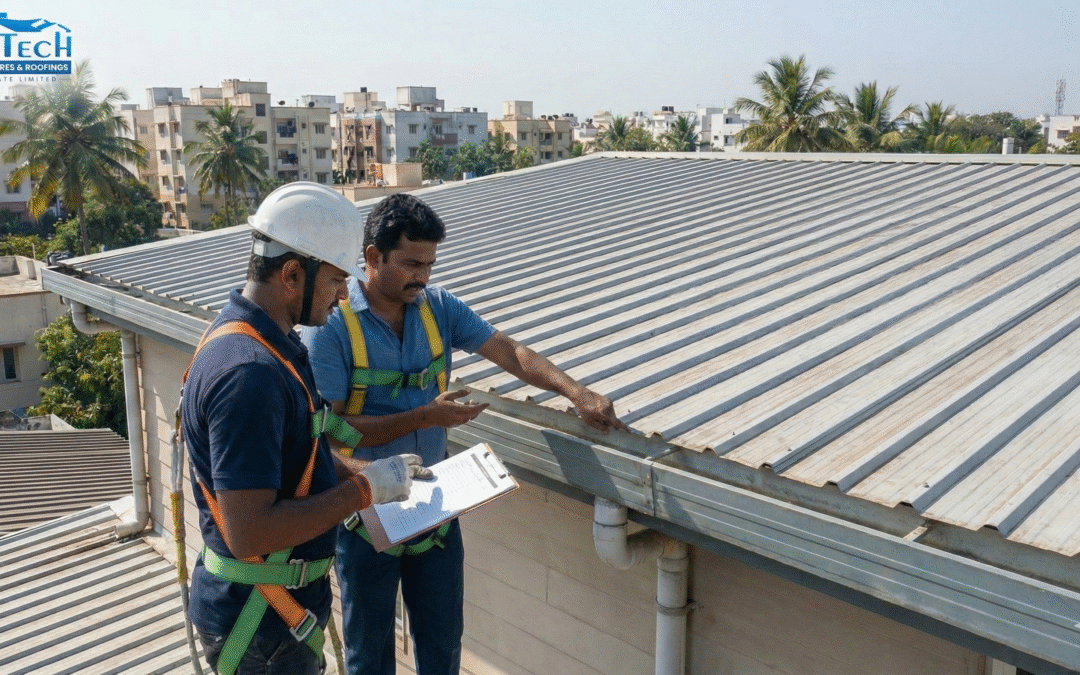
Every December, most of us sit down and reflect on the year — finances, health, maybe a few home improvements we managed to squeeze in. But there’s one thing that rarely makes it to that list. That is Roof inspection Chennai
The roof.
Which is ironic, because it silently endures the worst of Chennai’s weather — monsoon, humidity, scorching summer heat, and even the occasional cyclone. Yet, unless a leak appears or something starts rattling, we forget it exists.
A proper roof inspection Chennai homeowners can rely on is actually one of the smartest year-end habits you can develop.
Fixing things now — during mild weather — saves you from the chaos that summer heat can unleash on a weak roof.
Let’s walk through a simple, practical year-end roofing audit you can do without fancy tools.
Why Year-End Is the Best Time for a Roof Audit
Consider how the seasons move here:
- The monsoon just ended. Your roof took a heavy impact.
- Winter is calm. Perfect visibility, dry surfaces.
- Summer is coming… and it will magnify every tiny flaw.
This December-to-February window is ideal for a roof inspection in Chennai, whether you live in Chrompet, Velachery, Tambaram, or near the coastal belt. Damage is easier to spot, and the weather cooperates.
1. Start With a Simple Visual Scan
Before climbing or calling anyone, just step outside and look up.
Most homeowners don’t do this unless something dramatic happens.
Check for:
- uneven or sagging roof lines
- faded patches
- bent or loose flashing
- screws that look rusted
- parts of the roof that seem to move in strong winds
These obvious signs often reveal hidden issues underneath.
2. Identify Rust & Corrosion Early
Even if you’re not right next to the sea, Chennai’s salty humidity carries further than most people think — even areas like Chrompet or Pallavaram get mild salt exposure.
Look closely at:
- sheet overlaps
- corners
- joints
- gutter edges
- fasteners
If you spot orange patches, peeling metal, or white powder-like corrosion, handle it quickly.
A small rust patch now can turn into a full sheet replacement after April.
This is why every roof inspection Chennai professionals carry out puts rust checking at the top of the list.
3. Check Fasteners — The Small Parts That Fail First
Fasteners are usually the first components to rust, not the sheets.
When screws weaken:
- sheets lift during windy days
- gaps form
- water enters
- corrosion spreads
- strange noises appear
If your roof is older than 4–5 years, switching to anti-rust or marine-grade fasteners is a smart and inexpensive upgrade.
Homes in windy areas like Medavakkam, Sholinganallur, and ECR especially benefit from this.
4. Look for Damp Spots or Minor Leaks Inside
Not all roofing problems show up outside.
Sometimes the walls and ceilings tell the story first.
Check:
- room corners
- false ceiling edges
- near electrical fixtures
- top-floor walls
A faint, damp mark now becomes a clear leak in April when the roof expands under summer heat.
5. Inspect Gutters & Downpipes
Monsoon brings debris, dirt, and leaves along with rain.
If your gutters are clogged, water pooling near the roofing sheets will accelerate rust.
Look for:
- water stains
- loose brackets
- cracks
- bends
- blockages
Even a simple cleaning can make a noticeable difference in the lifespan of your roof.
6. Check for Coating Damage
Roof coatings fade faster in humid and coastal cities like Chennai.
You don’t need expert eyes to see it — the roof shows signs clearly.
Look out for:
- a dusty, chalk-like layer
- patches where colour has faded
- peeling edges
- exposed metal in certain spots
If you see any of these, it’s a sign the protective layer is wearing off.
A fresh coating in winter improves heat resistance and slows down corrosion, making summer far more bearable.
7. Roof Edges & Flashing — the Small Areas That Cause Big Trouble
Edges and flashing face the most wind and protect the weakest structural points.
That’s why they’re usually the first to misbehave.
Check if they look:
- slightly bent
- cracked
- loosened
- rattling during windy evenings
If ignored, these turn into leaks or sheet displacement.
Fixing them early is always cheaper than repairing damage after a storm.
8. Inspect the Under-Roof or Attic Area
If your home has an attic or an under-roof space, it’s a great place to spot the early signs of roofing issues.
Look for:
- moisture
- mould
- insulation damage
- unusual heat pockets
- musty smells
Many roof problems start inside before they become visible outside.
9. Do a Simple Evening Temperature Test
Here’s a small technique roofing professionals use.
Go upstairs around 8–9 PM during December or January.
If the room feels unusually warm despite the cool weather, your roof may be:
- losing insulation
- absorbing heat
- thinning in certain sections
- due for a new coating
This little test tells you a lot about how your roof will behave in April and May.
10. When Should You Call a Roofing Professional?
If you notice:
- rapid rust spread
- more than one leak
- sheets vibrating in the wind
- sagging roof lines
- major coating peel
- damp ceilings that keep returning
…it’s time to call a specialist for a roof inspection Chennai homes genuinely need.
A professional audit usually includes:
- metal thickness check
- fastener integrity
- coating and rust analysis
- structural alignment
- insulation condition
- thermal performance check
This goes far beyond what a homeowner can spot with the naked eye.
Final Thoughts — Solve Small Issues Before Summer Makes Them Big
Chennai’s summer isn’t gentle.
If your roof has even a tiny weakness, April’s heat will expose it and make things worse.
A year-end roofing audit is simple, affordable, and one of the best preventative steps you can take.
Fixing issues now — when the weather is calm — saves money, prevents surprises, and keeps your home protected.
Your roof works hard all year.
Give it 30 minutes of attention before the year ends.
You’ll thank yourself when summer hits. Booknow