
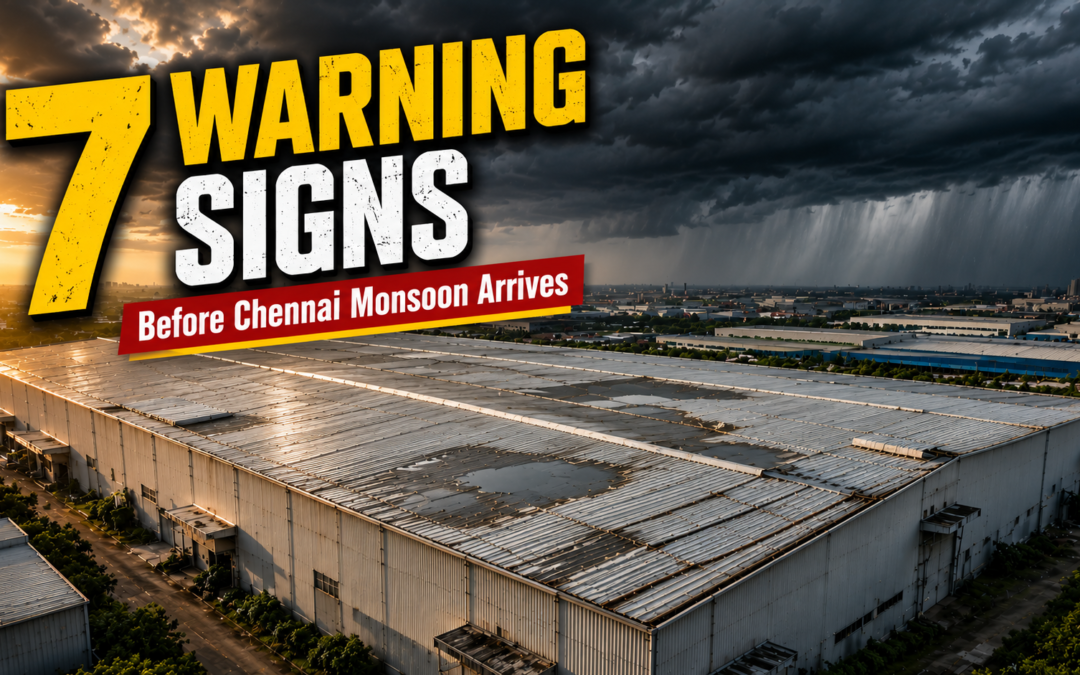
If you’ve run a factory or a warehouse here in Chennai for more than a couple of years, you already know how roofing issues work. The problems don’t actually start when the heavy clouds roll in. The first massive downpour just blows the cover on small issues that have been quietly developing for months while nobody was looking. That is why Factory Roof Inspection is important.
Think about it: a single loose screw, a gutter packed with factory dust, or a minor summer leak you ignored because it “wasn’t that bad.” Then suddenly, during a heavy 3 PM cloudburst, water starts dripping right onto your expensive machinery or your finished inventory stock, and your entire shift comes to a grinding halt.
That is exactly why getting up there for a thorough Factory Roof Inspection before the monsoon season starts isn’t just basic maintenance; it’s pure risk management. For plants out in Sriperumbudur, Oragadam, Ambattur, Guindy, or any of our local industrial zones, catching these flaws early is the only way to avoid a massive, expensive headache later.
The Reality of Chennai’s Weather Cycle
Our local climate is incredibly brutal on building structures. For eight months out of the year, your roof takes a non-stop beating from a blazing sun. Then, almost overnight, the weather flips completely, bringing torrential rain, intense humidity, and salty sea breezes.
This constant shifting from extreme heat to heavy water exposure puts massive physical stress on the joints and structure of your roof. Even a building that looks completely solid in May can start falling apart by October.
Experienced facility heads don’t wait for water to start pooling on the production floor before they call a technician. They handle their Factory Roof Inspection while the ground is still dry, because they know a quick preventive patch-up costs a fraction of an emergency shutdown.
Warning Sign #1: Those Annoying Leaks That Keep Coming Back
We’ve all seen it: a leak that seems to disappear for a few weeks, only to show up again during the next heavy storm.
A common mistake is simply slapping a temporary bit of sealant over the spot where you see the drip and assuming everything is fine. But a recurring leak usually means water is travelling along a complicated path through your structural overlaps or under-roof insulation. If you are fixing the same spot every single year, you don’t need another quick patch; you need a proper Factory Roof Inspection to find the real source before the monsoon sets in.
Warning Sign #2: Standing Water That Refuses to Drain
Take a quick walk up to your roof an hour or two after a brief shower. If you notice large pools of water just sitting there instead of flowing toward the downspouts, you have a structural issue.
Standing water adds a ton of unnecessary dead weight to your framing and eats away at the protective coatings on your sheets. This water ponding happens a lot in older industrial sheds where the steel trusses have settled over time or the gutters have started to sag. It’s incredibly easy to spot during a dry-season check, yet people constantly ignore it until the water finally rusts its way through.
Warning Sign #3: Shifting Sheets and Loose Fasteners
The first phase of a Chennai monsoon usually comes with strong, gusty winds, and those winds love to expose weak fixing points.
From down on the factory floor, you’ll never notice a loose screw or a profile sheet that’s shifting by a couple of millimetres. But when the wind starts pulling at those loose areas, the sheets begin to flex. That movement tears up the rubber washers, widens the screw holes, and leaves a perfect path for rainwater to pour right inside. Checking these anchors while they’re still dry keeps your roof steady when the storms hit.
Warning Sign #4: Rust Spots and Bleeding Seams
If your plant is located anywhere near the coast or works with high-humidity processes, rust is your biggest enemy.
Corrosion doesn’t just happen overnight. It’s a slow, quiet process that eats away at metal sheets until they completely give out. If your visual checks turn up bubbling paint, red stains, or flaking edges along the lap joints, your roof is trying to tell you something. Addressing these rusty patches now gives you time to look into modern, non-corrosive choices, like finding the Best Roofing Material for Chennai weather instead of being forced into a rushed emergency replacement in the middle of a storm.
Warning Sign #5: The Factory Floor Feels Like an Oven
It sounds a bit strange, but unbearable indoor heat during the summer months is often a major sign of a failing roof setup.
Your roof shouldn’t just keep the rain off your head; it’s supposed to act as a heat shield. If your workers are constantly complaining about the temperature or your exhaust fans are running at full blast just to keep the air moving, your roofing material isn’t doing its job anymore.
When these temperature issues pop up, a lot of companies start looking into Energy-Efficient Roofing Solutions. A roof that lets that much heat radiate downward usually has degraded insulation or outdated profile sheets that simply aren’t fit for our climate anymore.
Warning Sign #6: Dips or Sagging Along the Roofline
Step back outside your building and take a good look at the roofline. It should look completely straight, level, and uniform.
If you can see obvious dips, sagging valleys, or distorted sections along the profiles, you need to get a structural engineer up there immediately. Structural shifts can happen slowly due to building settlement or overloaded supports. When the heavy rains hit, these sagging spots become natural bowls that collect hundreds of kilos of rainwater, which is a major safety hazard for anyone working underneath.
Warning Sign #7: Nobody Has Checked the Roof in Over a Year
This is probably the biggest warning sign on the list. In a busy manufacturing plant, it’s easy to forget about the roof because nobody looks at it daily. Everything seems perfectly fine until the day a major leak disrupts your delivery timeline.
The logic is simple: if you can’t remember the last time your team logged an official roof check, you are taking a massive gamble with the upcoming monsoon. Regular, structured walk-throughs let you catch small, double-digit repairs before they turn into multi-lakh losses.
Should You Patch It Up or Replace the Whole Thing?
When your maintenance team finds a laundry list of issues, the big question always comes up: Do we just repair the bad spots, or is it time to replace the whole roof?
The answer comes down to basic math. If the trouble is limited to just a few sheets and your underlying structure is completely solid, a localized repair makes total sense.
But if you are stuck in a never-ending loop of patching new leaks every monsoon, fighting deep rust, and watching your electricity bills climb because of indoor heat, you are just throwing good money away. That’s the exact moment smart business owners start comparing UPVC Roofing vs Metal Roofing to see which material will give them the lowest overall lifecycle costs over the next twenty years.
Your Quick 10-Point Pre-Monsoon Roof Checklist
Before the dark clouds arrive over Chennai, hand your maintenance team this straightforward checklist:
- [ ] Check internal ceilings and walls for water stains or daylight peeking through.
- [ ] Walk the roof after a light shower to look for pooling water or slow drainage.
- [ ] Listen for rattling or vibrating sheets on windy days.
- [ ] Inspect screws and fasteners for cracked rubber washers or missing caps.
- [ ] Look for rust bleeding around overlaps and joint lines.
- [ ] Check the outside ridge lines to ensure nothing is sagging or dipping.
- [ ] Clean out all mud, silt, and dead leaves from the gutters and downspouts.
- [ ] Check the silicone seals around turbo ventilators and skylights.
- [ ] Identify sections of the factory floor that feel unusually hot during the day.
- [ ] Update your plant’s maintenance log and set a date for the next inspection.
Final Thoughts
The first heavy monsoon rain doesn’t create your roofing problems; it just hands you the bill for them.
Taking a day to run a proper Factory Roof Inspection right now gives your business the chance to fix minor weak points before they ever touch your production line, your raw materials, or your crew. For facilities across Chennai’s industrial hubs, the time to prepare is while the sun is still out. A little bit of proactive care today means you can sit back and focus on your business when the heavy rains finally hit.