
When factory owners here in Chennai look into upgrading their roofs, their first question is always about the price per square foot. But the moment they look past the quote, the very next question is always:
“How long is this thing actually going to last before I’m swapping it out again?”
It’s the right question to ask. No business owner wants to drop serious capital on a new roof, only to end up patching leaks, fighting rust, or looking at another massive bill just a few years down the line. In a coastal city like Chennai, where your roof sits under a punishing sun all year, gets slammed by the monsoons, and constantly breathes in salty, humid air, durability isn’t a luxury. It dictates your actual return on investment. If you’re looking at Unplasticized Polyvinyl Chloride (UPVC) for a factory, warehouse, industrial shed, or commercial building, let’s talk about UPVC Roofing Lifespan and what you can realistically expect.
The Trap: Counting Years vs. Counting Headaches
Too many people look at a roof quote and ask for a single, static number: “Will it last 10 years or 20 years?”
But experienced facility managers look at a completely different metric: how much trouble is that roof going to give me while it’s up there?
Think about it this way. A roof that lasts 15 years but forces you to halt production for patch-ups, rust treatments, and leak repairs every single monsoon is a bad investment. On the flip side, a roof that hits that same 15-year mark without costing you a single rupee in downtime or maintenance is a massive win.
That is exactly why UPVC roofing has caught on so fast across Chennai’s industrial zones. The real value isn’t just that it holds together for years; it’s that it does its job quietly in the background without constantly draining your maintenance budget.
Why Chennai Is a Nightmare for Traditional Roofs
Roofs in Chennai take a beating that materials in other parts of the country just don’t have to deal with. Our local climate hits buildings with a brutal combination:
- The Summer Bake: For most of the year, roofs act like giant heat magnets. Surface temperatures get high enough to warp, crack, or age lower-grade materials prematurely.
- The Monsoon Deluge: When the rains hit, they find every single gap. If water sits on a roof or pools around a fastener, it starts eating away at the structure.
- The Coastal Salt Air: If your facility is anywhere near the coast, the air is thick with salt. That salinity acts like an accelerant, triggering rust on metal components far faster than normal.
Because our environment is so aggressive, finding the best roofing material for Chennai means you have to think past day one. If the material can’t handle the local climate, you’ll end up paying for it through a slow leak in your bank account later.
What Actually Decides How Long Your Roof Lasts?
It isn’t just about the raw material you buy. A roof’s real-world lifespan comes down to a few major factors working together:
1. The Installation Blueprint
You can buy the most expensive material on the market, but if the installers cut corners, it’s going to fail. Missing structural supports, using cheap fasteners, or messing up the sheet overlaps will cut any roof’s lifespan right in half.
2. Daily Sun and Thermal Stress
Constant exposure to heat causes materials to expand and contract. Some materials absorb that heat and pass it right down to your factory floor, while others are built to resist it. This performance gap is why companies spend so much time analyzing UPVC Roofing Lifespan vs Metal Roofing before making a decision.
3. Slope and Water Runoff
A roof has to get water off its surface as fast as possible. If a layout allows water to pool in flat spots or clog up the gutters, moisture will find a way inside, regardless of the material.
4. Simple, Proactive Checks
Even the toughest industrial roofs need an occasional look. Setting up a basic maintenance schedule for industrial roofs means you catch a loose screw or a clogged valley before it turns into an expensive, middle-of-the-night emergency.
How UPVC Roofing Lifespan Stands Up to Chennai’s Elements
The reason UPVC works so well in Chennai comes down to basic chemistry: it is a polymer, which means it is physically impossible for it to rust. It doesn’t matter if your factory is right next to the port or miles inland—coastal salt air and high humidity cannot cause it to corrode.
On top of that, UPVC acts as a natural thermal barrier. Instead of soaking up the sun and turning your factory floor into an absolute oven, the material blocks the heat transfer. Most owners initially look at UPVC because they want to cool down their workspace, but they end up loving it because they don’t have to spend weekends painting anti-rust coatings onto their roofs.
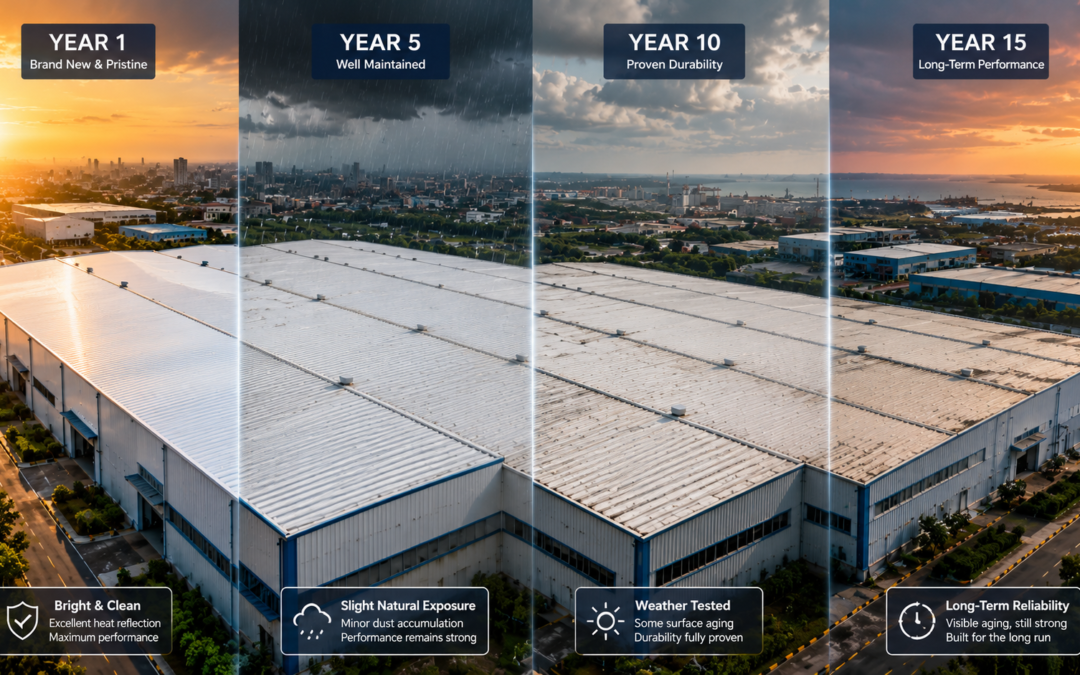
The Lifespan Timeline: Year 5, Year 10, and Year 15+
What does the actual timeline look like for a quality UPVC roof installed properly on a Chennai facility? Let’s walk through it realistically:
Year 5: The Trouble-Free Zone
At this stage, your UPVC Roofing Lifespan should look and perform exactly like it did the week it was put up. Aside from clearing away dead leaves, dust, or factory soot from the gutters, your maintenance team won’t need to touch them.
Year 10: The Turning Point
This is where you see the real difference between materials. By year ten, standard metal roofs in humid areas often start bleeding rust around the screw holes and seams. A good UPVC roof, however, stays completely clean and solid, keeping your machinery dry and your operations running.
Year 15 and Beyond: The Long Run
No material lasts forever, and after fifteen years of intense weather, any roof will show some normal wear. But because UPVC doesn’t rot or corrode from the inside out, the core structure remains totally stable. While the final lifespan depends on the specific profile thickness and UV protection used, UPVC is widely trusted as a true long-term choice for heavy industrial environments.
The Major Maintenance Mistake to Avoid
A massive mistake a lot of building managers make is operating on a “no news is good news” policy. They assume the roof is perfectly fine just because no one on the floor is complaining about a drip.
Unfortunately, by the time water actually drips onto your inventory or an active machine line, the underlying problem has usually been developing for months.
Getting a technician up there twice a year for a quick visual check is the easiest way to protect your building. Catching a loose flashing early costs next to nothing. And because UPVC doesn’t require constant scraping, priming, or anti-rust painting, your actual upkeep costs stay incredibly low.
Smart Math: Looking Past the Invoice Price
If you judge your roofing choices strictly by the absolute cheapest quote on your desk, you are missing the real financial picture. Your roof actively impacts:
- How exhausted your workers get during a July heatwave.
- How much do you spend every year on patch repairs?
- Your monthly electricity bills from running massive exhaust fans.
- The safety of the expensive equipment sitting right underneath it.
This is why smart businesses compare the latest UPVC roofing price in Chennai against the total cost of running the building over a decade, rather than just looking at the initial capital expenditure. Once you subtract the cost of endless rust treatments and factor in the energy savings from a cooler floor, the math makes a lot of sense.
The Bottom Line
So, how many years does UPVC Roofing Lifespan really give you in Chennai?
The honest answer is that its life will always depend on how well it was installed and how well you keep your gutters. But the real reason people are making the switch isn’t just a number on a page; it’s the predictability.
For factories, warehouses, and industrial sheds, a roof shouldn’t just be a cover over your head. It should protect your margins, keep your energy bills manageable, and handle our harsh coastal weather without demanding constant attention. If you want a roof that lets you focus on your business instead of building repairs, UPVC is the modern way to go.